

The Concept
The Designer

 My visit to the memorial was simply as an observer with no personal connection to the war and little historical perspective on its beginning, length, ending, causalities etc.
"The names of all of the US military personnel who died in the Vietnam war are inscribed on the surfaces of two long, black granite walls. The walls start out short (around twelve inches) and grow to more than nine feet in the center where the two meet. They are constructed this way for a special reason. All of the names are arranged by time (date of death), from the first who died during the "police action," to the mounting death toll at the height of the war, trickling off as the US pulled out of the area. The names thus chart the pattern of US involvement in Vietnam and the personal stories of the real people involved and most affected. Imagine how different the monument would be without this organization. Suppose the names were organized by alphabet (which was actually proposed once the design was accepted). While it might be easier to find a particular person, the search and the names themselves would be reduced to a mechanical list, a granite White Pages. Lost would be the individuality of each name and life. In a list of seventeen John Smiths, which one is yours?An alphabetical organization would have completely depersonalized the monument and devastated its emotional power, so would most other organizations. Imagine if the names were organized by category (e.g., pilots listed here, infantry listed there) or on a continuum based on rank or, for that matter, height (e.g., the tallest men at one end, the shortest at another). What is key to this emotional experience is that those who died are found among those whom they died with. Without this organization, in fact, there is no longer meaning to the wall growing and tapering down in height. Any other organization would have created a different memorial entirely and, most likely, one without the power and emotion created in the existing one. All of this is somewhat subliminal. When you visit the monument, its information structure isn't the first thing you perceive, but it works nonetheless. This is true of any project, whether it is a sensitive and emotional monument, a powerful and inspiring museum, a useful and concise catalog, or a thrilling and interesting performance."
Nathan Shedroff
 The map of the London subway system is held up as a masterpiece and effective example of the power of designing information.
 One of the core skills of a designer is to give form to culture. This requires an understanding of the meaning of things, aesthetics and behavior in the context of what is possible.
 Together, they tackled a wide breathe of creative explorations from film, toys and architecture to furniture, textiles and exhibitions. Their work produced not only a large body of varied work (1940 to 1984) but also new methods, manufacturing processes, shapes, images... hence making a significant contribution to America's post-modern aesthetic.
 The advantages include:
 LED Throwies Video
 This is not a product or experience that I have paid much attention to, but since it has come to my attention I have to ask what should I expect from a new entry in this category? Improved comfort, cleanliness and water conservation are my top-of-mind expectations for new toilets.
  Also, I am curious as to why there has been so little innovation around this fixture of the modern home?
 In 1950, Adrian Frutiger, 1928- , planned and realized a font family as a connected conceptual system, the 21 Univers alphabets. The look of this new font was fresh and contemporary, a result of the calculations of the stoke width and the relationship between the stroke and the surrounding white space.
 This remote interface uses a form factor that allows a more natural arm position. It makes use of some of the same motion sensing technology that can also be found in the Nintendo Wii.
 Whether BMW's sculptural body side panels, the sloping nose of the Lexus brand or other distinctive markers of automotive form language would provide tangible examples for a class to study.
 An informed team of authors have pulled together solid descriptions and examples that would help any designer build their design lexicon.
  George Carwardine, 1887-1948, an engineer found that his explorations with springs could be fittingly applied to lighting to provide flexible positioning that stays in place once adjusted.
 In 1972, Richard Sapper introduced the Trizio Lamp. Its mordern aesthetic proved appealing for home and office to a generation of successful business types that appreciated its clean lines and minimalist leanings. Sapper brought a few new twists to the desk lamp: a halogen light element, armiture used to conduct electricity and counter weights to fix the lamp in position.
 Having grown up in Detroit a visit to the Auto show was a rite of passage, but things have changed and the industry is shifting away from American domination. It seems that the spirit/passion of developing products has been slowly slipping for decades and with each passing year the search for purpose and reason (along with market share) is being captured more by foreign manufacturers. Toyota leads with an effective business strategy and BMW with inspired designs.
 Architects are rethinking ways in which to efficiently get people to the upper floors of large buildings by focusing on queuing techniques and applying smart technologies.
 Raymond Loewy, 1893-1986, was a great self- promoter and pioneer of industrial design consulting.Working with leading manufactures of his day, he was known for bringing a streamlined aesthetic to products as diverse as refrigerators, trains, buses, pencil sharpeners, vacuums...
  One of the most rewarding projects in graduate school was for the course: Theory of Information and Communication. We were asked to study several communication theories and select one and demonstrate its application.
 I selected the W. Barnett Pearce theory on Representation and Interaction: Designing the Position of the Viewer in which to study. This social model of communication suggested that the point of view of the creator of a graphic piece can be determine by analyzing the product along key criteria. The idea was that there were three kinds of relationships embedded in images: 1) the relations between represented participants 2) relations between producer and the represented participants and 3) relations (interaction) between the producer and the viewer of an image.
 I chose the Blue Note Album Art as the subject of my analysis. The graphic art of this history making jazz record label was fitting for this inquiry because its imagery was both radical and rare for the time. The use of black male imagery to sell a commerial product was precedent setting.
 My research would reveal a deep appreciation and admiration for the creators of jazz music by the photographer Francis Wolff and graphic artist Ried Miles. They captured intimate protraits of artist engaged in their craft then translated those images into heroric reflections of black males for public consumption.

 Silicones are water repellent, heat stable, and very resistant to chemical attack. They find many uses in oils, greases, and rubberlike materials. Silicone oils are very desirable since they do not decompose at high temperature and do not become viscous. Other silicones are used in hydraulic fluids, electrical insulators and moisture proofing agent in fabrics.
 Computing technologies are allowing the creation of presentation models/prototypes to be produce with the touch a button. This process can be thought of as 3D printing.
 I continue to encourage friends and family who haven't been persuade to purchase an Apple computer to do so. And, that their loyality to the PC is over rated, especially when the device or the software undermines their stated goal. (Ok, I know that price is often the deciding factor for most purchase decisions, but let me get back on my soapbox.)
 Chicago's Museum of Science and Industry annual black history month exhibition, Black Creativity, this year the focus is on Industrial Designers who merge science and style to address consumer needs.
 The Book
 Products have been getting smaller for years, but the pace at which technology is allowing the size of products to shrink has been seemingly shortening with each new product line introduction. The public has responded to Apple's shrinking Ipod favorably, maybe the reduced price of each new model has a little to do with it. Acceptance of this trend is also being helped along by the accompanying desire/limits of today's consumers for portability, energy conservation and smaller spaces.
  His AEG Turbine factory was a landmark of modern architecture.
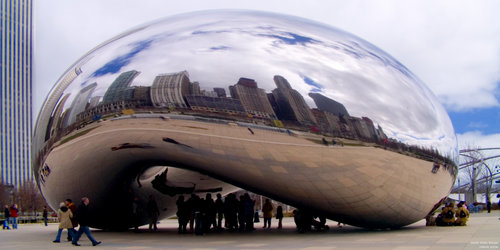 Design students would benefit greatly from being challenged to provide a rationale for the choices made on the way to a design solution.
 The Coca-Cola "waisted" bottle designed by Alexander Samuelson and introduced in 1915 was not it's first bottle but it is the one most associated with the product.
  The Story of the Contoured Bottle
"design has worked its way into everyday life and aspirations in our community"



 Company Infomation
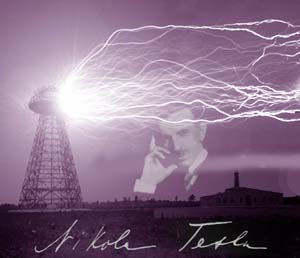 Nikola Tesla, 1856 to 1943, defined the principles by which electrical energy could be harnessed and transmitted.
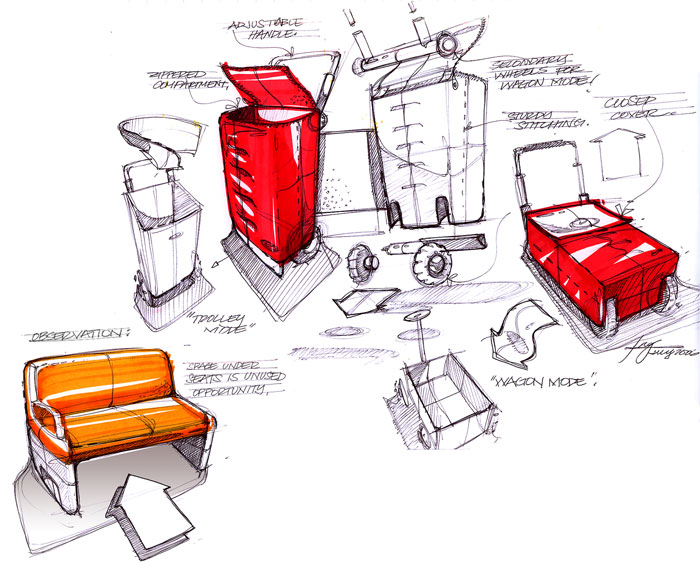 Rendering images with pencil on paper is a fading skill among many design students. But for those that develop and use the skill they are often able to set themselves apart by the quality of the designs they produce.

