Sunday, January 21, 2007

Lighting Technology: LED

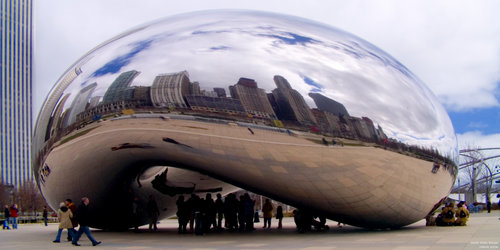
Light Emitting Diodes (LED) are finding their way into many applications and changing products as varied as graffiti art, cell phones, televisions and automobiles.

The advantages include:
* More light per Watt than do incandescent bulbs.
* Light of an intended color without the use of color filters.
* The solid package of an LED can be designed to focus its light.
* Built inside solid cases that makes them extremely durable.
* An extremely long life span: upwards of 100,000 hours.
* Fail by dimming over time, rather than the abrupt burn-out.
* Light up very quickly. LED will achieve full brightness in microseconds.
* Can be very small and are easily populated onto printed circuit boards.

LED Throwies Video

How Diodes Work

The World Bank's Plans to Light Africa

Product: Toilet (Neorest 600)

This is not a product or experience that I have paid much attention to, but since it has come to my attention I have to ask what should I expect from a new entry in this category? Improved comfort, cleanliness and water conservation are my top-of-mind expectations for new toilets.

Also, I am curious as to why there has been so little innovation around this fixture of the modern home?

The worlds largest manufacturer of toilets is a Japanese company named Toto. They have recently introduced a pricey and innovative toilet, Neorest 600, that should shake up the competition with its high tech features.


When/Who Invented the Toilet?

Modern Movements

Wired Article

Friday, January 19, 2007

Typography: Univers Font

In the 1950's, Typography finally broke from its conservative influences, dating back centuries, to develop type shapes applicable for use in modern communication mediums.

In 1950, Adrian Frutiger, 1928- , planned and realized a font family as a connected conceptual system, the 21 Univers alphabets. The look of this new font was fresh and contemporary, a result of the calculations of the stoke width and the relationship between the stroke and the surrounding white space.

Typography Resource

Thursday, January 18, 2007

Remote Control of the Future: The Loop

Televisions have change significantly over the last few years, now a new remote is being offered to enhance navigating in a 500+ channel environment.

This remote interface uses a form factor that allows a more natural arm position. It makes use of some of the same motion sensing technology that can also be found in the Nintendo Wii.


Hillcrest Labs

CNET Article

Class Project: Analyzing Form

A project that would help new students of design to develop their ability to identify and talk about form would be to assign them to study auto designs and document their understanding of the langauge use by a particular auto company or trends across the industry.

Whether BMW's sculptural body side panels, the sloping nose of the Lexus brand or other distinctive markers of automotive form language would provide tangible examples for a class to study.

Using the tools of their choice students would identify, analyze and present their conclusions. The learning for the student would be in making a personal connection with form, using visual language to describe and defend their view (critical analysis)of a product that that has impacted us all.

Design Principles and Terminology

This book, Universal Principles of Design is a good resource for the study of design terms and concepts.

An informed team of authors have pulled together solid descriptions and examples that would help any designer build their design lexicon.


Barnes and Noble

Wednesday, January 17, 2007

Design Icons: Lineage of Task Lighting

In 1933 the introduction of the AnglePoise Lamp was the first to allow lighting to be redirected through using springs to hold the lamp in various positions. This proved ingenious and useful and continues to be produced today.

George Carwardine, 1887-1948, an engineer found that his explorations with springs could be fittingly applied to lighting to provide flexible positioning that stays in place once adjusted.


History of the AnglePoise Lamp


In 1972, Richard Sapper introduced the Trizio Lamp. Its mordern aesthetic proved appealing for home and office to a generation of successful business types that appreciated its clean lines and minimalist leanings. Sapper brought a few new twists to the desk lamp: a halogen light element, armiture used to conduct electricity and counter weights to fix the lamp in position.

Richard Sapper Interviewed

This leads to the question of what is the next step in task lighting and what will reflect the sensibilities of the 21st century?

Tuesday, January 16, 2007

The State of Auto Design?

Since the kick off of the 2007 North American Auto Show last week, I have been thinking about the state of the American car makers and auto design. (photo:Lexus)

Having grown up in Detroit a visit to the Auto show was a rite of passage, but things have changed and the industry is shifting away from American domination. It seems that the spirit/passion of developing products has been slowly slipping for decades and with each passing year the search for purpose and reason (along with market share) is being captured more by foreign manufacturers. Toyota leads with an effective business strategy and BMW with inspired designs.

On the basic level of form, when I think of Ford generic is a word that comes to mind. The same can be said for GM, whereas Chrysler does have some distinctive forms that come to mind. Specifically, the 300 full size sedan, the line of Dodge products that have a unifying language and Jeep goes without saying.

On the cosmetic level interior lighting seems to be one of the trends coming out of the show this year.

Friday, January 12, 2007

Systems Thinking: Smart Elevators

The ability to rethink a problem starts with restating the problem clearly, then working through a process that identifies all of the sub-components and seeks out a best solution without being limited by established conventions.

Architects are rethinking ways in which to efficiently get people to the upper floors of large buildings by focusing on queuing techniques and applying smart technologies.

As a result the user's experience is enhanced, lobbies are cleared of waiting passengers, elevator wait times are reduced and riders stop on fewer unwanted floors.

Audio Explanation

Design Pioneer: Raymond loewy

I was introduced to the profession of industrial design when I saw a 60 Minutes interview with Mr. Loewy in 1981.

Raymond Loewy, 1893-1986, was a great self- promoter and pioneer of industrial design consulting.Working with leading manufactures of his day, he was known for bringing a streamlined aesthetic to products as diverse as refrigerators, trains, buses, pencil sharpeners, vacuums...

He was considered a styling genius, who glamorized the practice of design and thus having raised the status of the profession. He was the first designer to appear on the cover of Time magazine (1949).

Loewy Website 1
Loewy Website 2

Thursday, January 11, 2007

Communication Theory: Code of the Jazz Musician

One of the most rewarding projects in graduate school was for the course: Theory of Information and Communication. We were asked to study several communication theories and select one and demonstrate its application.
I selected the W. Barnett Pearce theory on Representation and Interaction: Designing the Position of the Viewer in which to study. This social model of communication suggested that the point of view of the creator of a graphic piece can be determine by analyzing the product along key criteria. The idea was that there were three kinds of relationships embedded in images: 1) the relations between represented participants 2) relations between producer and the represented participants and 3) relations (interaction) between the producer and the viewer of an image.

I chose the Blue Note Album Art as the subject of my analysis. The graphic art of this history making jazz record label was fitting for this inquiry because its imagery was both radical and rare for the time. The use of black male imagery to sell a commerial product was precedent setting.

My research would reveal a deep appreciation and admiration for the creators of jazz music by the photographer Francis Wolff and graphic artist Ried Miles. They captured intimate protraits of artist engaged in their craft then translated those images into heroric reflections of black males for public consumption.

Wednesday, January 10, 2007

Medical Products: An Opportunity for Designers

An area ripe for designers to make significant contributions is in health care.
Organizations that provide support to the health care industry whether directly or through any aspect that touchs the patient's experience offers tremendous opportunity.

It is easy to find products in this space that have not been touched by a designer, the baby thermometer (above) by Vicks, is an example of one that has. This design allows the care giver to safely and accurately take an infants temper.

FDA Works to Reduce Medical Device Injuries

Trends in Medical Technology

Article GE Medical

Material: Silicone

Materials are often a source of new product ideas. Silicone is slowly finding its way into the modern kitchen.

Silicones are water repellent, heat stable, and very resistant to chemical attack. They find many uses in oils, greases, and rubberlike materials. Silicone oils are very desirable since they do not decompose at high temperature and do not become viscous. Other silicones are used in hydraulic fluids, electrical insulators and moisture proofing agent in fabrics.

Silicones have a number of medical applications because they are chemically inert. A good deal of controversy has involved the the use of silicone in polyurethane bags as breast implants.

NY Times Article

Tuesday, January 09, 2007

Practice: Rapid Prototyping

The process of creating a model is getting easier by the day.

Computing technologies are allowing the creation of presentation models/prototypes to be produce with the touch a button. This process can be thought of as 3D printing.

Rapid Prototyping (RP) greatest benefit is the reduction in development time. There are a few different systems that can be used to produce these 3D models including: Stereolithography (SLA), Selective Laser Sintering (SLS®), Laminated Object Manufacturing (LOM™), Fused Deposition Modeling (FDM), Solid Ground Curing (SGC), and Ink Jet printing techniques.

Unfortuntely, this same technology allows for knock-offs products to be produced in short order.

Article

A Definition
NYTimes 5-2007

Apple: Introduces A New Product

I continue to encourage friends and family who haven't been persuade to purchase an Apple computer to do so. And, that their loyality to the PC is over rated, especially when the device or the software undermines their stated goal. (Ok, I know that price is often the deciding factor for most purchase decisions, but let me get back on my soapbox.)

So as Apple introduces its iphone, I expect to hear the chorus of family and friends singing that a phone is a phone what's so different about this one.

The expectation when Apple introduces a product is that it will include something unique and valuable that users will appreciate and which will separate it from all other offerings. This does not mean that any of the technology is new, but it is the arrangement of elements that makes their products special. (Mp3's where around before the ipod, but the introduction of an elegant device and service (itunes) that made assessing and playing digital files helped changed the face of music.)

I do not know if Apples newest product will revolutionize phones, but I do hope it is a step closer to a better one.


NY Times Article

NY Times Article

NPR Article

Apple's Influence

Monday, January 08, 2007

New Product: Cordless Bagless Hand Vac

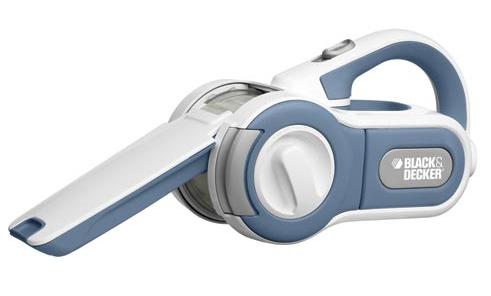
In October 2006, I thought Dyson's, Root 6, entry into the hand vac category was a viable contender for the best solution. But, Black and Decker (BD) has bested them with it newest model, an integrated solution that fits easily into a home environment.

It is both powerful and easy to use with its handle placed behind and above the motor. The materials and color are superior to those used on the Root 6.

But, the most thoughtful feature, is that the unit is self contained. The pivoting nozzle allows additional flexibility without much effort and the hinged door allows the collected content to be removed with a shake. Finally, the recharging stand provides a nice resting place for the unit when not in use. My conclusion, the BD's Pivot Vac is a much better product and priced at least half of what you would pay for the Root 6.


Exhibtion: Designs for Life - Chicago

Chicago's Museum of Science and Industry annual black history month exhibition, Black Creativity, this year the focus is on Industrial Designers who merge science and style to address consumer needs.


Black Creativity 2007

Tribune Article

Tuesday, January 02, 2007

Selling Innovation: A Better Light Bulb

The success of new products are impacted by how they fit within a business case. So beyond whether a product is technically feasible, or even offering direct benefits to the consumers, it must also prove viable to the organization's goals so that it will receive the necessary organizational backing to be successful .

Hence, designers should consider and speak to how a new product fits and supports the goals of an organization.


Article: Wall Mart

Video: Selling The Light Bulb

Thursday, December 28, 2006

Exhibition: Design Life Now

The Copper Hewitt - National Design Museum takes a look at the state of design in its exihibition Design Life Now. The 2006 Triennial presents experimental projects, emerging ideas, major buildings, and new products and media created by 87 designers and firms from 2003 to 2006. The show will run through July 29, 2007.

National Design Museum

Review of the Exhibiton

Friday, December 22, 2006

New Materials: Resource

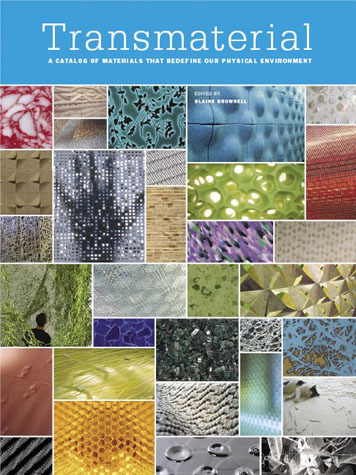
Blaine Brownell, Seattle based architect, is quickly becoming the source through multiple media (books, blog and email) to track developments in new materials.

The Book

The Website

Business Week Article

Another Source

Trends: Miniaturization and Customization

Products have been getting smaller for years, but the pace at which technology is allowing the size of products to shrink has been seemingly shortening with each new product line introduction. The public has responded to Apple's shrinking Ipod favorably, maybe the reduced price of each new model has a little to do with it. Acceptance of this trend is also being helped along by the accompanying desire/limits of today's consumers for portability, energy conservation and smaller spaces.

Where is this trend heading you ask?
Well, with the increased use of embedded computers and wireless connectivity many products will simply disappear from view, particularly those whose primary function is to store and transport information. Data will increasingly be stored and then retrieved via the internet, leaving the need for information tools that perform a unique task (e.g. phone, camera, calender, calculator etc.) or better yet a single tool that can modified perform a desired task when needed.

The miniaturization trend coupled with flexible manufacturing techniques is creating the opportunity to easily create customized products. Many would-be entrepreneurs are responding to this new ability by designing products for micro-markets (themselves and friends).

What impact will the democratization of design have on the designer you ask?
Well as with any informed constituent it will raise the bar of expected knowledge and skill requirements for the designer. Conversely, many pseudo-designers will be exposed, if not tared-and-feathered, and those with talent will be rewarded with more work then they can handle. But ultimately, the demand for well thought through products solutions that address the needs of a user group will continue to provide opportunity to those who can deliver.

As an industry the cell phone manufactures over the last ten years have reflected this movement to miniaturization and customization (think ring tones) better than most.

Thursday, December 21, 2006

Design History: Corporate Identity

Peter Behren, a German architect signed on to work as a consultant to AEG, a large electrical corporation (1907 to 1914), and in so doing he created what is considered the first corporate identity program.

He redesign the company's products, buildings, graphic materials, its trademark, sales outlets etc. Behren's was keenly aware of context and image, thus fashioning a theme which unified the company's message to the public.

His AEG Turbine factory was a landmark of modern architecture.

Behren's Biography

Wednesday, December 20, 2006

Design Education: Moving beyond Form

Design students would benefit greatly from being challenged to provide a rationale for the choices made on the way to a design solution.

Design curiculums have for years focused on teaching design mostly from a form, technology and materials perspective. The opportunity in designing information products is to challenge design students to weight the value of adding or not adding a feature to a product. "Because we can" is not a suffiecent reason to add an additional feature.

Values need to be assigned to features in order to determine if including them would cost more than the value they would add. The hidden cost of added features range from: a delay at getting a product to market because shortage of parts, increased complexity for the user when operating the product, added expense thus a higher selling price potentially missing the target market just to name a few.

In order to ask design student to venture beyond form considerations would mean that the instructor would need to be an astute practioner able to provide the correct balance so that students gain the ability to weight the appropriatness when deciding on solutions that work not only on the form level but also business and usuability level. This is asking alot but professionals can grow to it.

Tuesday, December 19, 2006

A Design Classic: Packaging

A well thought through design doesn't end with the product itself, but also considers how it is contained and received by the consumer.

The Coca-Cola "waisted" bottle designed by Alexander Samuelson and introduced in 1915 was not it's first bottle but it is the one most associated with the product.

It has become an global icon not only for the company but for American beverages.

The Story of the Contoured Bottle

Earlier Bottles

Material History: Bakelite (1909)

Bakelite, the worlds first synthetic plastic introduced in 1909, became "the material of a thousand uses".

This thermosetting material developed by Leo Baekeland, led plastics to be described by many as the material of the 20th century.

Because of its non-conductor properties and it being particularly suitable for mass production moulding processes made Bakelite material useful as the exterior skin of electrical appliances, and thus allowed the asethetic of consumer products of that time to take on new shapes.

The State of Design in Washington DC

The Washington Post's desgin critic, Linda Hales, reflects on the status of design as she closes out her tenure at the paper.

"design has worked its way into everyday life and aspirations in our community"


Washington Post Aricle

Washington Canal Park Concept Document

Saturday, December 16, 2006

Its Time for more Laundry Options

I think it is time for American consumers be given the option to purchase a combination washer and dyer. The appliance industry in America has protected its market by offering only the separate units for decades. But, living situations have changed, with more consumers living in smaller spaces and living alone, but their options for laundry are still limited.

Do we still want to devote an entire room to laundry, must it be in the basement, must we unload one unit to fill another, might we wash smaller loads if it was convenient, can washing and drying be combined into a single unit?


Samsung's Solution

Research Findings

Video on the History of the Washing Machine

The Broom Improved


This solution seems obvious but the merging of the broom and vacuum eliminates the need for the dust pan and the accompanying strain on the back.

I do think the solution can be tweeted more to fully resolve its potential. The handle does not seem to have been addressed at all. Improving the user's comfort and control by applying basic human factors to the handle could make this a winning product.

Company Infomation

Video on the History of the Vacuum

Friday, December 15, 2006

Tangible Media: The Space in Between


The patterns of our daily lives will be altered as computers and sensors are embedded into everything around us. Research at MIT's Media Lab and other programs like it are looking into how physical form can be given to digital information.

Designers can assist in constructing for users the bridge (interface) between the physical and virtual worlds.

MIT Research

Video of Drawing Tool

Genius and Pioneer: Nikola Tesla

Nikola Tesla is the true unsung prophet of the electronic age. His discoveries were the foundation on which 20th century industrial development in the United States was base.

Nikola Tesla, 1856 to 1943, defined the principles by which electrical energy could be harnessed and transmitted.

He developed alternating current (AC) power generation and how energy can be distributed over long distances; the universal transmission; wireless communication which allowed for the development of radio and television.


The Father of the Electric Age

Tesla Biography

Tesla Museum

Book by Nikola Tesla

Technology Lesson for Kids

Here is nice online lesson on the Industrial Revolution and how one invention was follow by others and the resulting impact on life and society.

History of the Industrial Revolution

The Secret Life of Machines Series

Videos

Thursday, December 14, 2006

Ten Products that have Change our Parents Lives

Over the past seventy years several products have altered the lives of our parents. How much more should we anticipate our lives being changed as a result of the pace with which new products and technologies are being introduced.?

1) Television (see link below for the list)


The List of Ten

The List of New Concepts

Video The History of Televison

Wednesday, December 13, 2006

Drawing: The Disappearing Art of Design Thinking

Rendering images with pencil on paper is a fading skill among many design students. But for those that develop and use the skill they are often able to set themselves apart by the quality of the designs they produce.

Drawing helps to faciliate thinking. Hence increasing the potential to work through a problem while also creating a visual record of one's thinking process.

Drawing skills are respected by older practicing design professionals, many who have never relied on the computer as a tool and often are the ones in the position of evaluting potential new employees.

Tuesday, December 12, 2006

Presenting a Design Concept

The structure of a presentation has the ability to persuade decision-makers to green light a project or not.

Washington DC's city government presented a plan to build a bike station.


You decide if the concept is presented clearly and is persausive enough?


Bike Station Concept Proposal

Monday, December 11, 2006

OrangeWorks: Home Depot's New Product Line

What does it mean when the worlds largest home products retailer partners with a leading design consultancy to develop new products?

It could be said that HD is taking a cue from Target's success in building brand destinction through design. This approach to growing the business is not new, Sears did the same when it was the leading retailer and produced brands like Kenmore and Craftman tools.

We can only hope that the HD customer will be provided with appropriately designed quality products that are supported directly by the organization.

Orange Works Press Release

The Arnell Group

The Target Effect

Future Trend: More Designers for India and China

Many countries have established design policies that promote Design and the training of designers as an integral part of their national education policy.

America does not have a national design policy, at best issues around design and design education are left to professional organizations (i.e. AIGA, IDSA) to address. So as nations compete to grow their national economies would America benefit from developing a uniform policy of its own?

In other words, as with industries like the textile or automobile, will we leave American companies to compete against nation states on their own? Will American companies answer be to export their design work? Will individual designers have difficulty competing with peers trained overseas?

India Invests in Design Education

India's Design Policy

Sunday, December 10, 2006

Company: OXO - Universal Design

An American housewares company that has for 15 years addressed the needs of users by focusing on designing products that allow the broadest possible number of people (older, younger and people with limited abilities) to use their products.


Fast Company Article

Universal Design Principals

Good Grips

Oxo in Japan

Universal design principles came to light in the 1980's and led to more consideration being given to older and special needs of consumers. Hence designer's were encouraged to be more inclusionary when developing products.

Class Project: The Iron

The iron would be a great product in which to direct students in the evaluation and comparison of current product offerings and then lead them into a study exploring form. This is a product which most all homes have and students would have assess to.

The iron has maintained the same fundamental function and its form has remained a constant.

The opportunity for students would be consider elements like water collection and storage, controls, the power source and cord arrangement. This would be considered in the light of culture and new technologies.


Review of Irons

Saturday, December 09, 2006

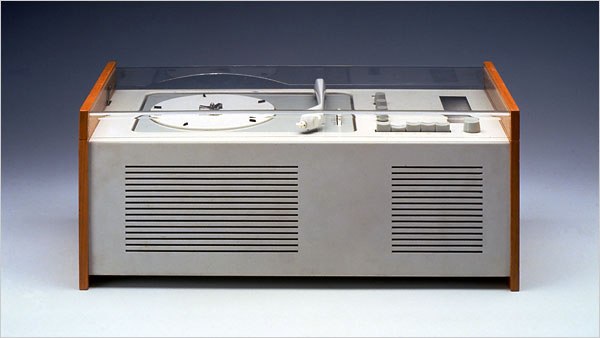
Design History: Dieter Rams

Using a visual language based on simplicity and function this German trained architect grew to become one of the most influential industrial designers of the latter half of the 20th century.


Dieter Rams (b.1932-) freed consumer electronic equipment from the large wooden consoles of the fifties and fashioned efficient new housings made of plastic and metal. As with other truly influential designers, he applied new technologies to solve problems that satisfied the needs of consumers while also adding value to his employer - Braun.

Biography

Article

Article

Friday, December 08, 2006

Design Strategy: Nintendo Game Console

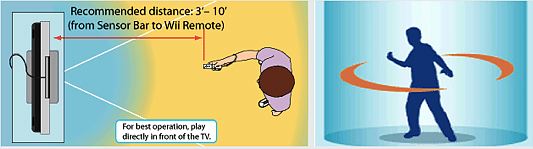
After a few weeks on the market Nintendo's game console (Wii) seems to be changing the game and getting gamers' off the couch. By making the right decisions about the placement of their product in the market Nintendo could ensure the continued growth of their business.

Their decisions appear to have considered the users gaming experience and wallet over flashy technological features on this go-round. This not only leveraged their position as underdog, against to large revivals that have price their systems much higher, but they have taken the lead in redefining the gaming experience. Therefore, Nintendo is likely to draw in new users and add, if not, convert existing Sony and Xbox owners.

Nintendo/Sony/Microsoft is one Strategy Better?

Nintendo Users Dilemma

Wii Straps

Wii Demo:


How it WorksHow It Works

Bottom Line Numbers

Designer's Salary Survey

The Institute of Design's (ID) salary survey provides insight into what graduates of their master programs have reported earning.

Students entering ID arrive with varying levels of professional and academic experience. And so, the range of starting salaries following graduation are certainly influenced by many factors.

Survey Findings

Thursday, December 07, 2006

Materials in Design

One of the best books on materials that provides clear digestable examples is "Mutant Materials" by Paola Antonelli of the Musuem of Modern Art (MOMA) in 1995. I would love to find a copy of the book at a reasonable price.

"The best example of this revolution in design materials is the experimentation with composites, one of the more significant advances in twentieth-century technology. Composites are combinations of materials and of their individual properties. The most frequently used are compounds of thermosetting resins, which are lightweight and corrosion-resistant, and glass or carbon fibers, which are strong as well as flexible. Such hybrid materials have revolutionized the manufacture of a wide range of objects, particularly sports and medical equipment and automobile and airplane components.

Design can be described as the attempt to achieve a goal (an ideal object) using the available means (materials and techniques). The new, mutable character of materials, as expressive as it is functional, has generated new forms as well as a more experimental approach toward design. The goal of this exhibition is to offer insight into this new approach--a redefinition of the relationship between designers and the materials they use. The selected objects are diverse and express the technical and formal possibilities of both new materials and new technologies, through an evolving, rather than codified, contemporary language. Each possesses a logical beauty. Collectively, they portray an aesthetic centered on economy and continuing research."

The book contains definitions, examples as well as images of the materials used in modern design.

Mutant Materials Online Resource

Amazon Link

Techinque: Prototyping

Prototyping is the process of creating models that represent in (2D or 3D) a designers thinking about a product or system. In designing scale models or "low fidelity" prototypes (paper) are created to demonstrate an idea. This technique provides a way to quickly explore or test out a solution idea and is repeated throughout the process of developing digital or analog products.


Paper Prototyping

Wikipedia

Sunday, December 03, 2006

Design Research: What is it?

A design project should begin with some form of research that provides insight into human behavior and creates a context in which to begin the process of designing.

"Design plays a role that is distinct from, but complementary to the roles of science and of technological innovation in the advancement of knowledge ...

Designers are concerned with the socially, culturally, and spatially situated application of technologies to meet specific human needs. Successful design depends upon deep understanding of needs and their contexts, practical knowledge of the means available to respond, and strategies for creatively relating the two. It combines resourceful problem solving with ongoing critical reflection."
-MIT Design Lab

Social science discplines like ethnography and anthropology are being adopted by designers to provide a basis for understanding (users).


Book: Design Research

Saturday, December 02, 2006

Design History: " The People's Car"

The most popular car ever made was the VW Beetle with more than 20,000,000 manufactured over a 60 year period.

I had the pleasure of experiencing the appeal of this product first hand, as an owner. Its distinctive form, the reliability of its rear mounted engine with it's unique squil holds wonderful memories of life as a young adult maturing in the 1980s.


If there was ever a product with personality this is one, just ask anyone who owned one.


Video of the History of the Car